7 min read • 1,511 words
What Is Version Control and Why Do Developers Need It?
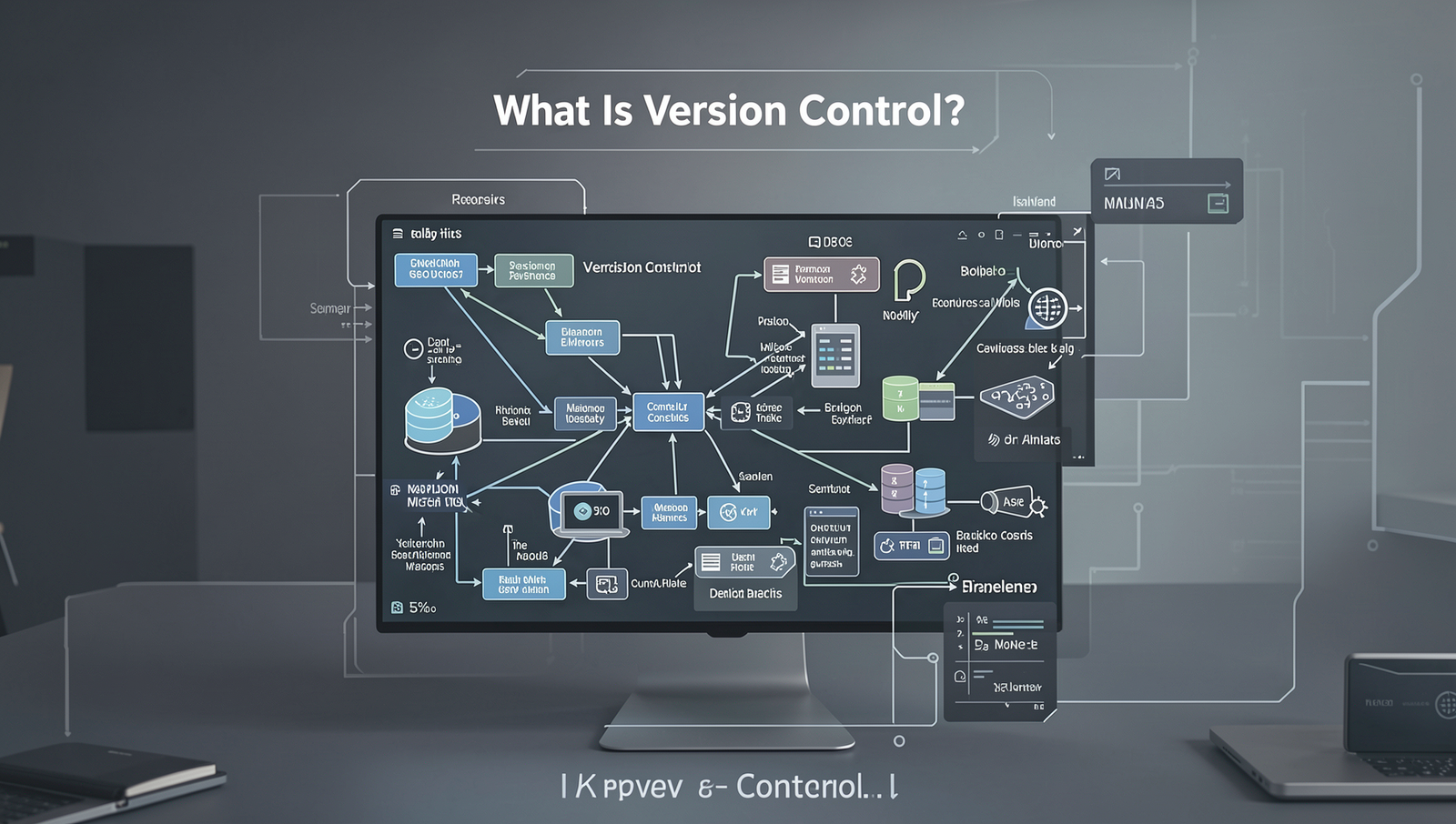
In the world of software development, understanding what is version control is essential for both individual developers and teams. Version control systems (VCS) are tools that track changes to files over time, enabling developers to revert to previous versions when necessary. This capability is crucial, as it allows teams to collaborate effectively on projects without the fear of overwriting each other’s work. By providing a comprehensive history of changes, version control makes it easier to understand how a project has evolved, which is invaluable for both current and future development efforts.
Moreover, version control systems facilitate branching and merging, allowing developers to work on new features independently without disrupting the main codebase. This independence not only enhances productivity but also helps maintain code quality through structured code reviews and issue tracking. In this article, we will explore the fundamentals of version control, its significance in modern development practices, and how it can streamline your workflow.
Popular Version Control Systems
Version control systems (VCS) are essential tools for developers, allowing them to track changes, collaborate effectively, and manage codebases efficiently. Among the various VCS available, Git is the most popular and widely used. Its distributed nature enables multiple developers to work on a project simultaneously without interfering with each other’s progress. Git’s branching and merging capabilities allow for experimentation and feature development without affecting the main codebase, making it a favorite among open-source projects and large teams.
While Git is dominant, there are other version control systems worth considering, such as Subversion (SVN), Mercurial, and Perforce. Each of these systems has unique features and use cases that may suit different project requirements.
- Subversion (SVN): SVN is a centralized version control system that is often used in enterprise environments. It allows for fine-grained access control and is suitable for projects that require a single source of truth. SVN is particularly useful for large binary files and has a straightforward learning curve.
- Mercurial: Mercurial is another distributed version control system similar to Git but with a simpler command structure. It is known for its speed and efficiency, making it a good choice for projects with a smaller team or less complex workflows.
- Perforce: Perforce is designed for large-scale projects and offers robust support for large files and binary assets. It is commonly used in game development and industries where performance and scalability are critical.
When choosing the right version control system for your project, consider factors such as team size, project complexity, and specific workflow needs. For example, if your team is distributed and requires extensive collaboration, Git may be the best option. Conversely, if your project involves large files and requires strict access control, Perforce or SVN might be more appropriate. Ultimately, understanding what is version control and the strengths of each system will help you make an informed decision.

Getting Started with Version Control
Version control is an essential tool for developers, allowing them to track changes in their codebase over time. To get started with version control, you first need to set up a version control system (VCS). Popular systems include Git, Mercurial, and Subversion, with Git being the most widely used. The installation process is straightforward. For Git, you can download it from the official website or use a package manager. For example, on a Unix-based system, you can install Git using the following command:
sudo apt-get install gitAfter installation, you need to configure your user information, which is crucial for tracking contributions accurately. You can set your name and email address with these commands:
git config --global user.name "Your Name"git config --global user.email "your.email@example.com"Once your version control system is set up, you can start using basic commands and workflows. The primary actions you will perform include committing changes, pushing to a remote repository, and pulling updates. To commit changes, use:
git commit -m "Your commit message"To push your changes to a remote repository, use:
git push origin mainTo pull the latest changes from the remote repository, use:
git pull origin mainTo use version control effectively, consider these best practices:
- Commit often with clear messages.
- Use branches for new features or bug fixes.
- Regularly sync with the main branch to avoid conflicts.
For further learning, there are numerous resources available, including the official Git documentation, online courses, and community forums. Understanding what is version control and how to utilize it effectively will greatly enhance your development workflow.
Conclusion
In summary, version control is an essential tool for developers that facilitates the management of changes to code and documentation over time. By understanding what is version control, developers can effectively track modifications, collaborate with team members, and maintain a comprehensive history of their projects. This system not only enhances productivity but also minimizes the risk of errors and conflicts, making it easier to revert to previous versions if needed. The ability to branch and merge code allows teams to work on features simultaneously without disrupting the main codebase, which is a significant advantage in today’s fast-paced development environments.
As developers continue to embrace version control, the next steps involve selecting the right version control system that fits their workflow and team dynamics. Whether opting for Git, Mercurial, or another tool, understanding what is version control will empower developers to streamline their processes, improve collaboration, and ultimately deliver higher-quality software. Investing time in mastering version control is a crucial step for any developer aiming to enhance their skills and efficiency in software development.
Real-World Examples
Version control systems (VCS) are essential tools in software development, enabling teams to manage changes to codebases effectively. To understand the practical implications of version control, let’s explore various real-world scenarios where it plays a crucial role.
One of the most common examples is in collaborative software development environments. Consider a team of developers working on a web application. Each developer may be responsible for different features or components of the application. Without version control, coordinating these changes would be chaotic. For instance, if Developer A is working on the user authentication module while Developer B is simultaneously developing the payment processing feature, they could easily overwrite each other’s work. However, with a VCS like Git, each developer can work on their own branch, allowing them to make changes independently without affecting the main codebase until they are ready to merge their changes.
Another practical example can be seen in open-source projects. Many popular open-source software applications, such as Linux and Mozilla Firefox, rely heavily on version control systems. Contributors from around the world can submit their code changes through a process known as a pull request. This allows project maintainers to review the proposed changes, discuss potential improvements, and merge them into the main project. This collaborative approach not only enhances the quality of the software but also fosters a community of developers who can learn from each other. The use of version control in this context ensures that every contribution is tracked, and the history of changes is preserved, making it easier to identify when and why specific changes were made.
Version control also plays a vital role in maintaining code quality through features like branching and tagging. For instance, a development team may create a new branch for a major feature they are working on, allowing them to experiment and make changes without impacting the stable version of the application. Once the feature is complete and thoroughly tested, it can be merged back into the main branch. Additionally, teams often use tags to mark specific points in the project’s history, such as a release version. This practice makes it easy to revert to a previous state if a new release introduces bugs or issues.
Furthermore, version control systems provide a safety net for developers. Imagine a scenario where a developer accidentally deletes a crucial piece of code or introduces a bug that breaks the application. With a VCS, the developer can easily revert to a previous version of the code, restoring it to a stable state. This ability to roll back changes not only saves time but also reduces the stress associated with coding errors.
In addition to software development, version control can be beneficial in other fields such as content creation and documentation. For example, writers and editors can use version control to manage changes to documents, track revisions, and collaborate on content. This is particularly useful in environments where multiple stakeholders are involved, ensuring that everyone is on the same page and that the history of changes is well-documented.
In conclusion, the practical applications of version control are vast and varied. From facilitating collaboration among developers to ensuring code quality and providing a safety net for mistakes, version control systems are indispensable tools in today’s development landscape. As software projects grow in complexity and scale, the importance of understanding what version control is and how to leverage it effectively cannot be overstated.
Frequently Asked Questions
What is version control?
Version control is a system that